Energizer Torch Remodel
This project was completed in the first semester of 2020, where COVID-19 had affected studies in many ways that were not expected. Over the length of the project, I worked primarily from home behind the Zoom app, video chatting with tutors, taking lectures online and discussing ideas & solutions with my peers virtually. I found the format challenging as it forced myself to take time management much more seriously than before thanks to the always home learning and work. Reflecting back on it now a month after the final presentation, I feel as though I had pushed through the unique challenges myself and the rest of the world may be going through. Ultimately ending with a finished product that I am proud of.
This project was built using: Adobe Photoshop & Illustrator for graphics, Powerpoint for the presentation, Cinema 4D for product visualization and AutoDesk Fusion 360 for CAD drawing.
About the Project?
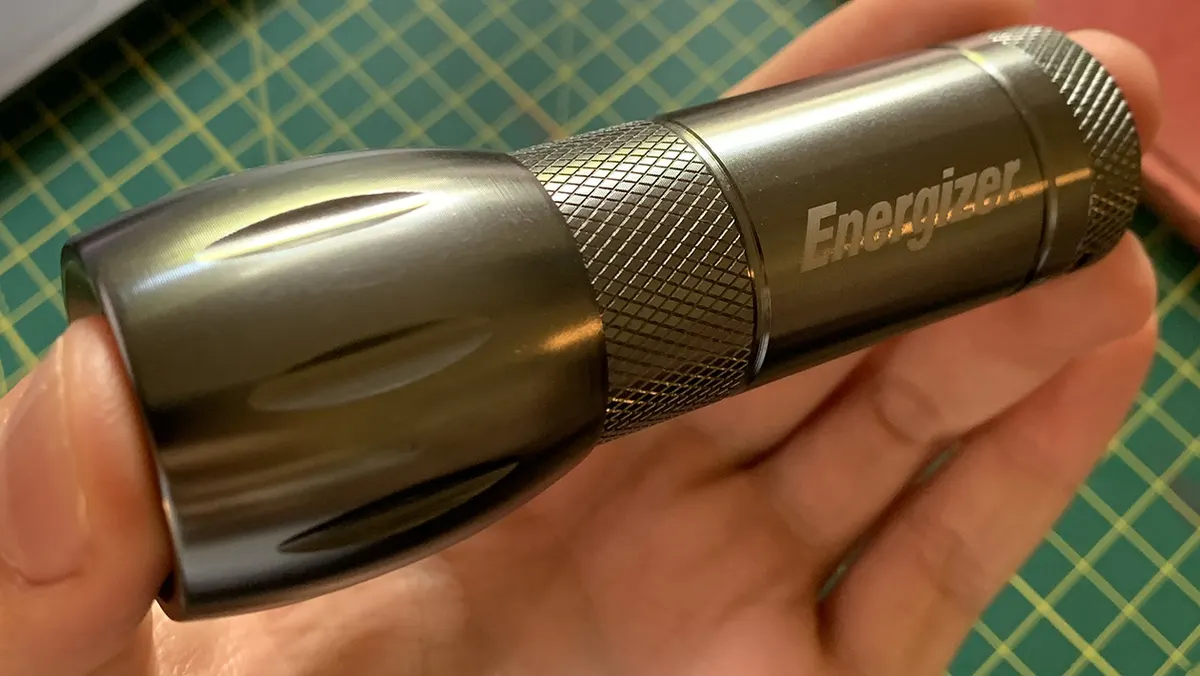
This project took form first with the deconstruction of the Energizer ML-33A-V1 Compact Torch.
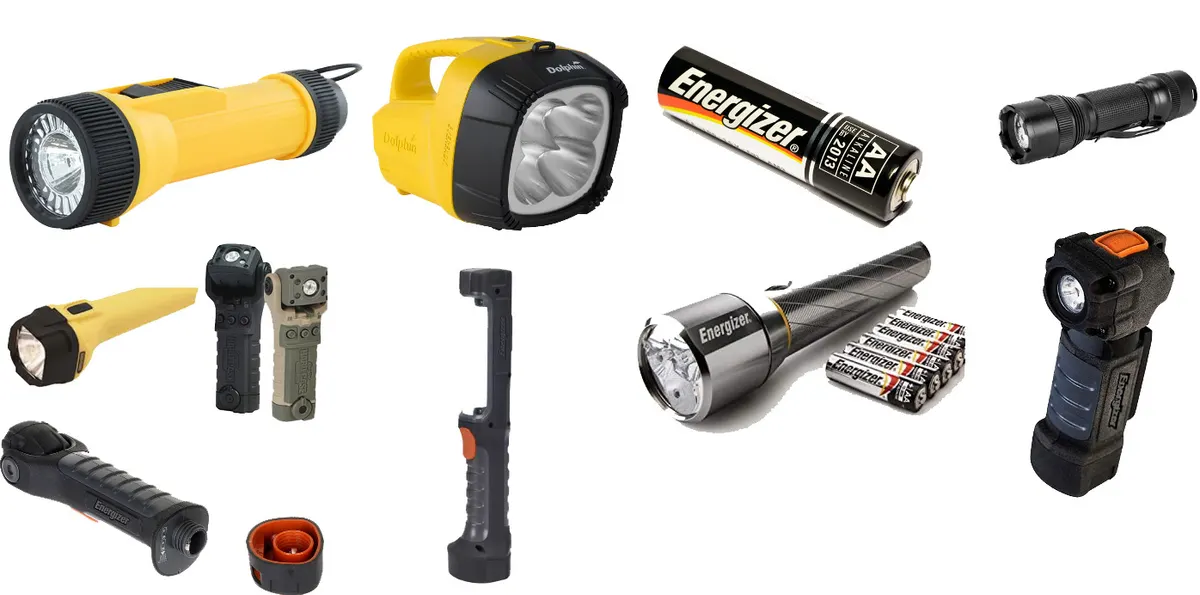
Energizer, the manufacturer of the original torch, founded in 1896, hosts a wide range of existing manufacturing processes from interact injection moulding in their popular dolphin range of torches, to a specialized process creating 30% of worlds batteries. Uniquely enabling Energizer to spread out further than most manufactures when it comes to material and manufacturing process opportunities.
1:Capture (Reconstruction & Rethinking)
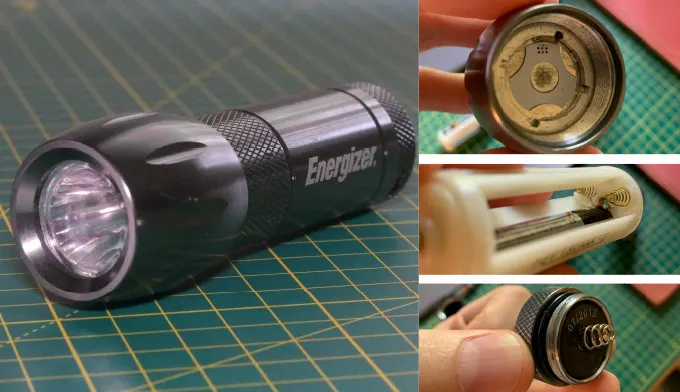
Analysing each part of the original torch to their core. I was able to reconstruct it’s materials and manufacturing techniques.
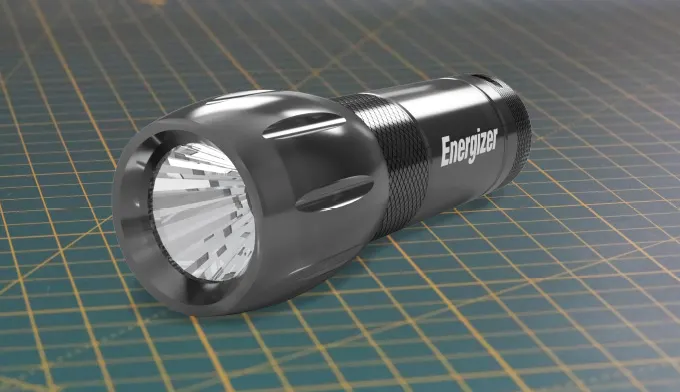
To this this cad model accurate within the mm to the parts that were accessible without damaging the torch.
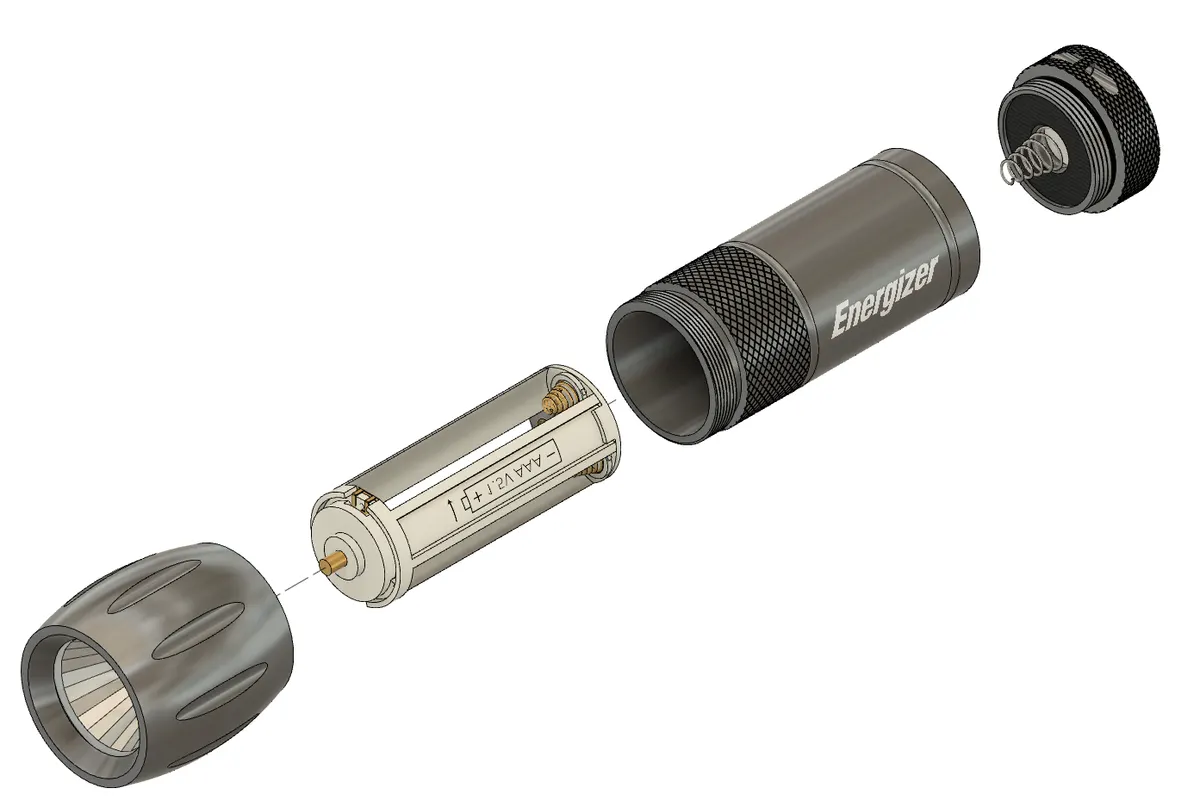
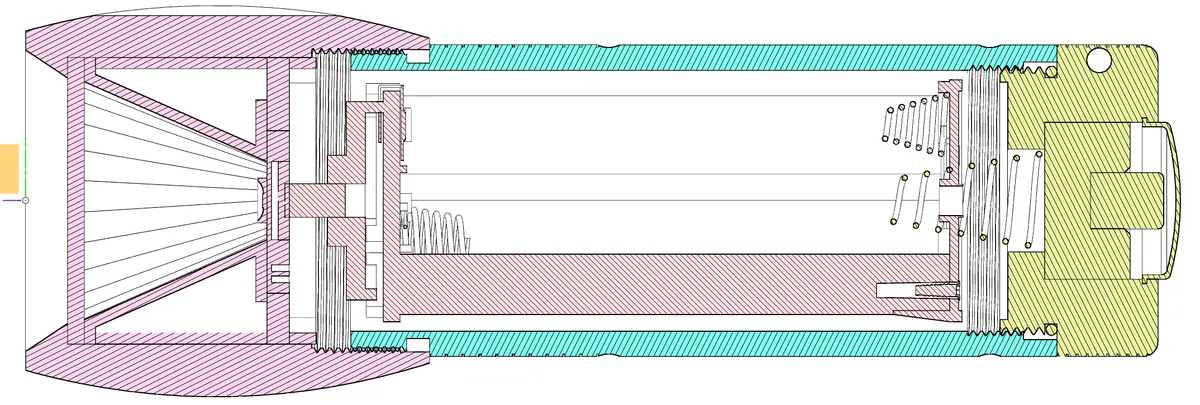
Rethinking the Design

From the initial CAD drawing, the project led to rethinking the original design. Following a context change aimed at upper levels of the hiking hobby.
2: Research (Discovery & Inspiration)
Research followed into finding materials that may be used in similar manufacturing techniques. As well as discovering what hiking enthusiast gear affords to it’s specific context.
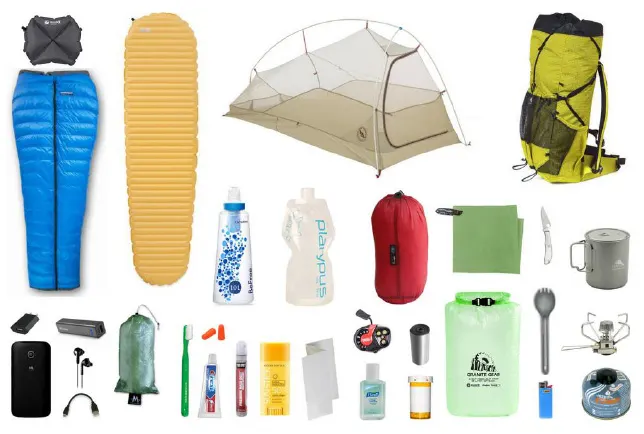
Beginning with the existing list of designed hiking equipment, research found the top 90% of products were built to last rather than the increasingly popular trend: built to decompose.
Design Opportunities
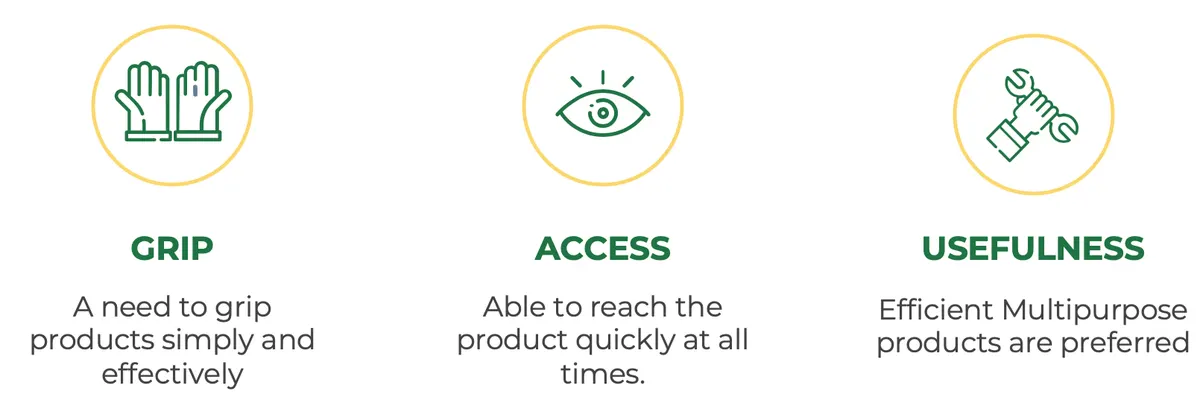
Through this research the findings returned: grip, access and usefulness as the key points I decided to touch on. A need for a product that’s easy to hold without strain; something that's easily accessible at all times, ultimately providing a usefulness higher than itself.
Material Choices
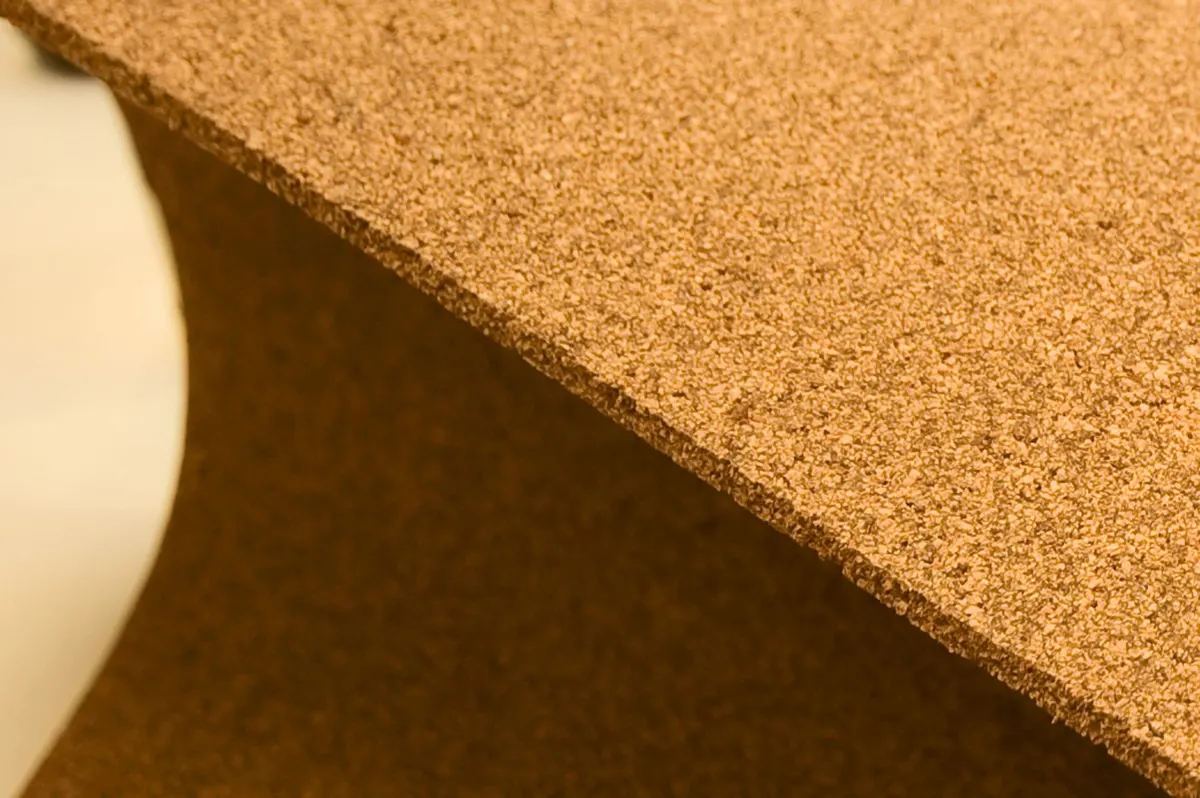
Hiking equipment afforded new material opportunities leading me to an injection moulded CPC Cork Polymer. A manufacturing process that Energizer is already well versed in with their dolphin range of torches.
3:Final Design (Result Analysis)
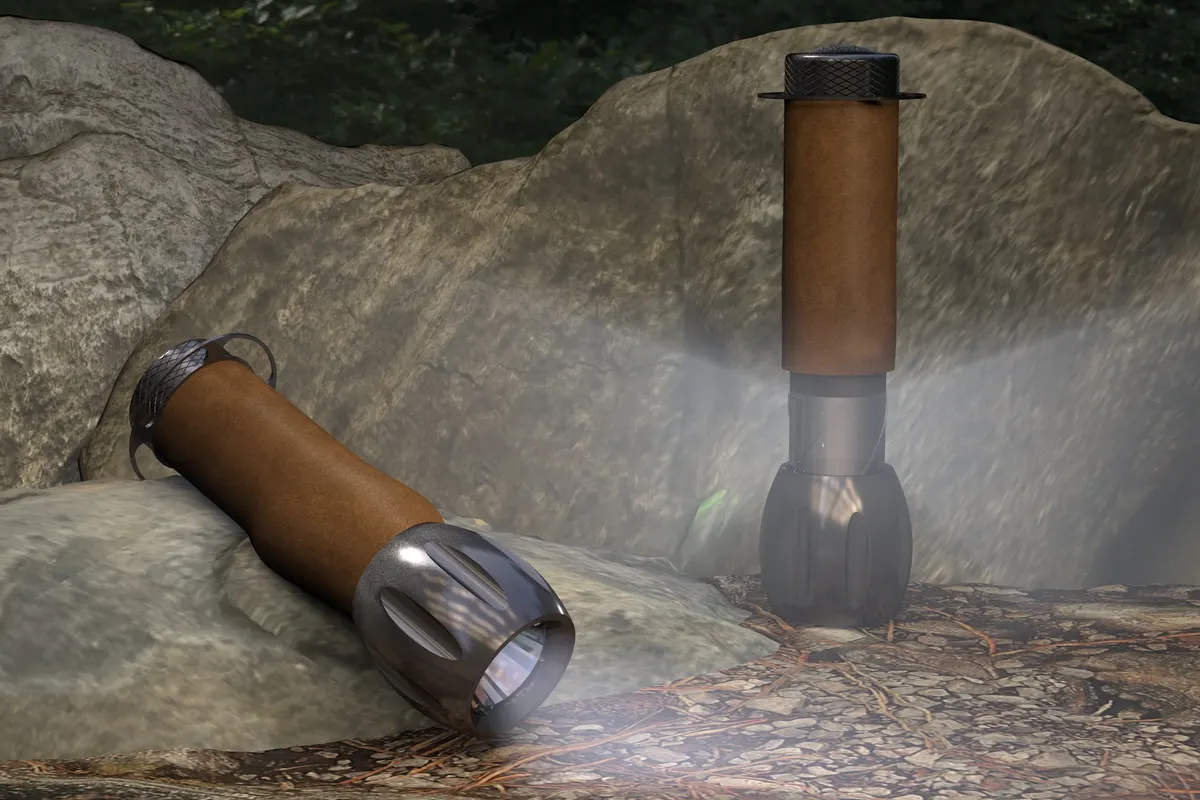
Pictured is the final design I ended up with, both in its usable states. As a torch and as a lamp.
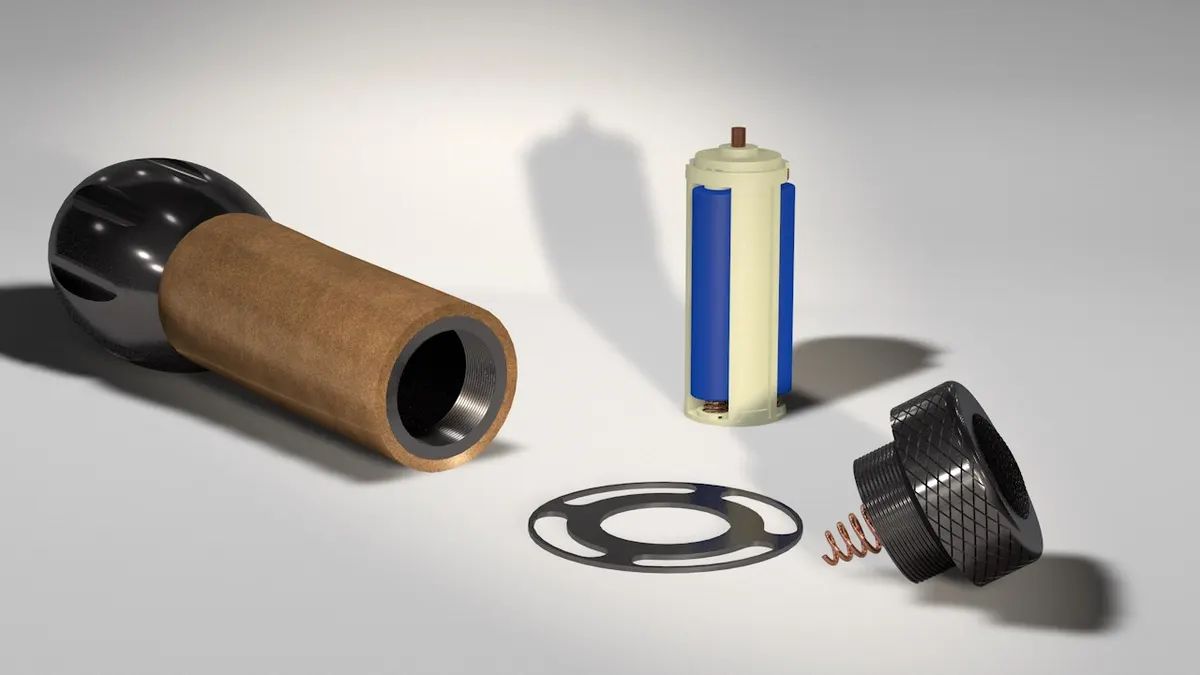
The hiking torch breaks down in to 4 major components. 1, the main body which contains the head and lamp, wrapped in cork. 2 the button at the rear whose design is closely matched to it’s predictor for familiar manufacturing. 3, the anchor point, a new addition. Finally the existing internal component, the battery cradle, as apart of the brief.
Access
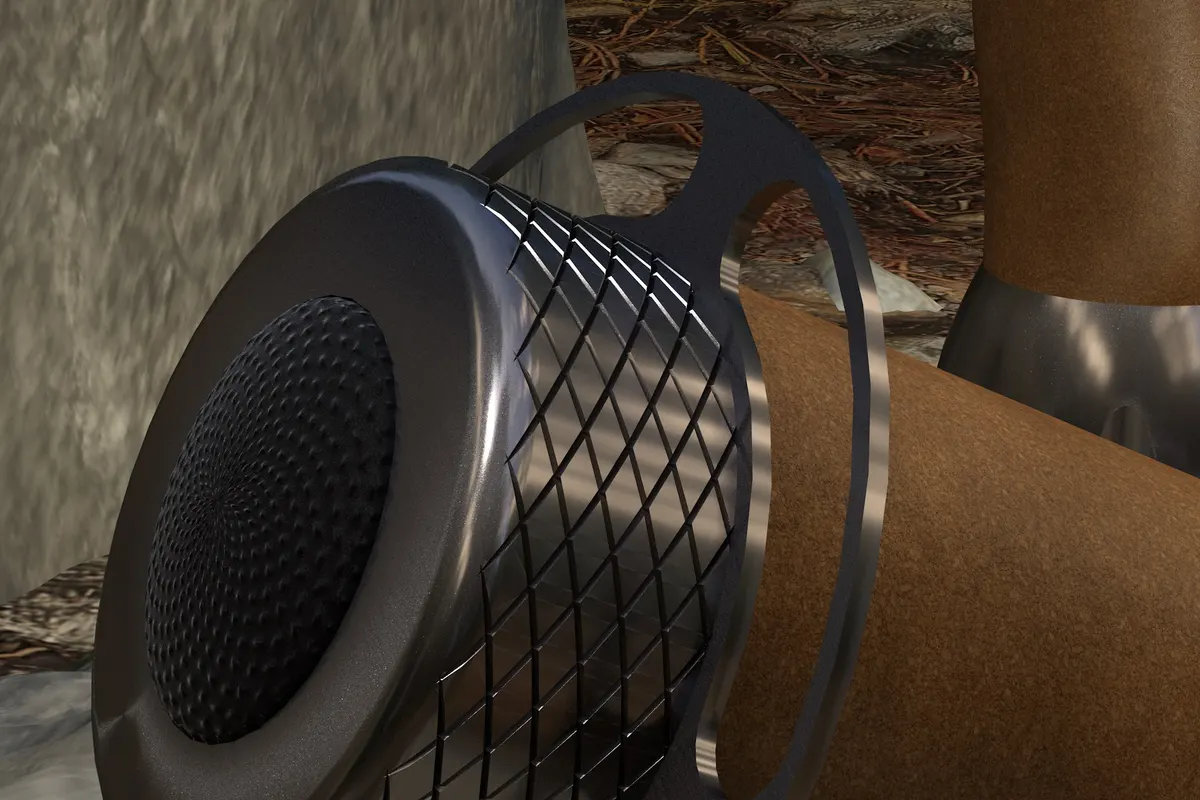
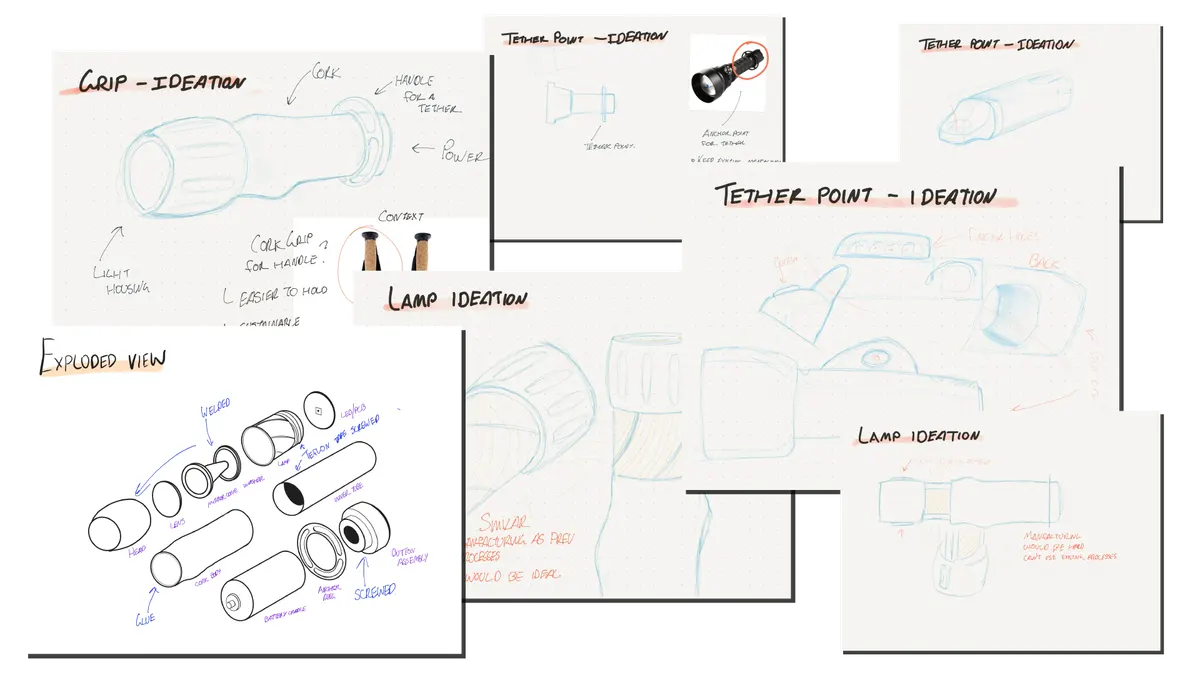
Fulfilling the access requirement, the anchor point attached to the torch is manufactured from a die cut aluminium plate. Simply cut to a roundel shape allowing users to attach ropes or carabineers too with ease.
Grip
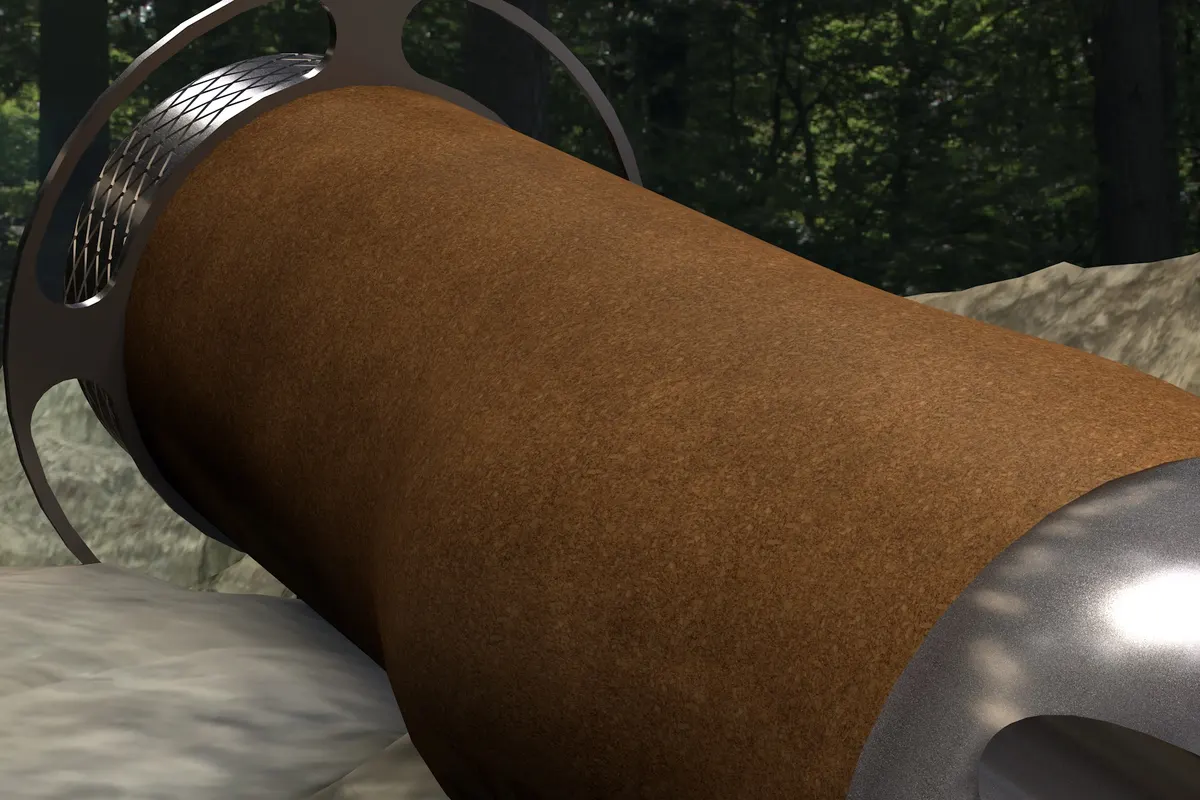
Achieving the grip standard, I have incorporated a cork handle who’s special material makeup allows itself to be injection moulded. A process Energizer is familiar with in their dolphin range of torches. The handle would be moulded flat out then wrapped around the inner tube, adhered with glue to improve mass manufacturability.
Usefulness
Attached to the body through a screw - Teflon adhered to itself, the lamp reveals TAP itself in just a twist, lighting the surrounding area. Achieving the final goal of “Usefulness”. Each position is held through friction mounts at each point. The mirror cone inside is what allows the transformation to happen.
Modelling
Whilst CAD drawing the new torch, I took a top down approach, beginning with the head lamp as my ”Driving” entity working my way back to the rear button assembly. Ensuring each part fits seamlessly with each other as I go.
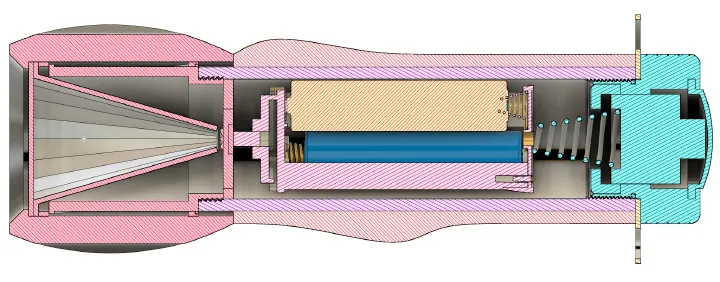
When looking at the sectional view, the lamp sliding mechanism becomes more apparent. The head itself would be assembled layer by layer. First with the clear protection disc, then the mirror cone, next a washer that would be welded in place to the housing after which the inner lamp shade would be inserted finally with a slide guide added in place, also welded to position.
As mentioned earlier the threading here would be adhered together with Teflon tape for the simplest solution of adhering aluminium to acrylic.
New Materials
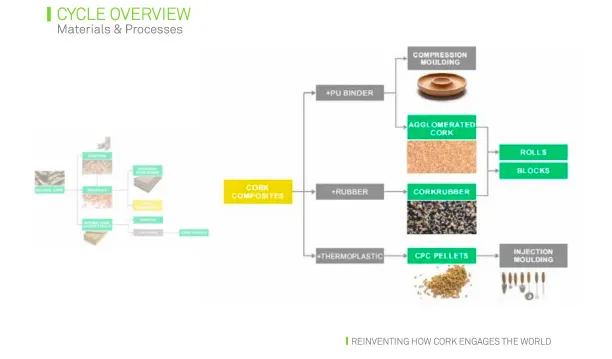
Inline with the global need for more sustainable products, the hiking context afforded new materials. CPC Cork Polymer would be used to create the main handle on the hiking torch. A composite Material that’s unique makeup allows it to be injection moulded suitable to quick manufacturing. Longevity is achieved thanks to it polyvinyl acetate mixture enabling strong, long lasting resistance. It's material makeup 30% Cork Flour, 30% Coconut Fibre and 40% PVAc Resin.
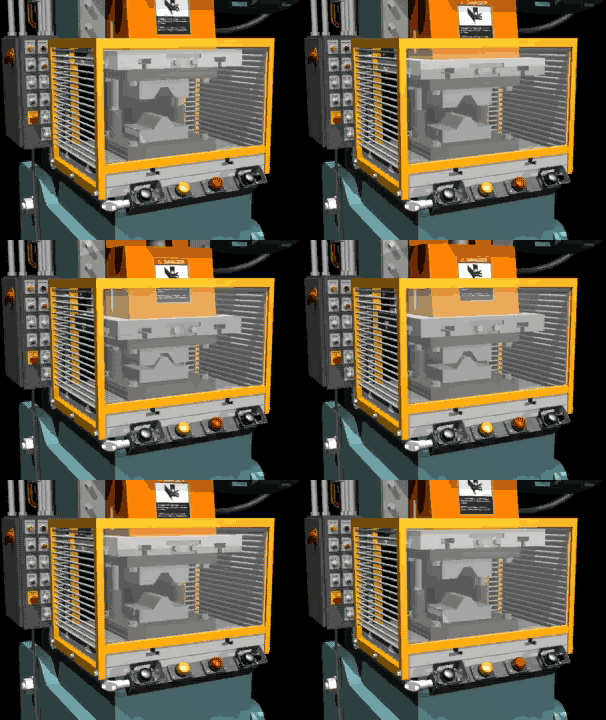
A new manufacturing process was added to quickly create the anchor point located between the button and body. Stamping or known as Pressing, allows a for the rapid manipulation of sheet metal. The material chosen to accompany this process, Aluminium 6061 T6, allows for a cold formed process without great structural strength loss. After this process an anodization sequence can occur similar to the other existing parts, the head and button.
With the thoughtful changes discussed, the designs core parts are essentially the same components with minimal changes to each one. This allows for the current manufacturer, Energizer, to simply perform basic retooling efforts to begin large scale manufacturing of the largest components. The head housing, inner tube and back button assembly being the components easily achievable.
In summary, the hiking torch shown today, takes the best of both worlds. Acclimatized to the new hiking enthusiast context, the torch is effective at reaching the three goals I have set myself: grip, access and usefulness. With the use of existing knowledge the expected manufacture, Energizer, maintains – making use of common processes such as injection moulding and machine milled aluminium.
Thank you
Please feel free to contact me if you have any questions about this project, or any other aspect of this website and my work.